
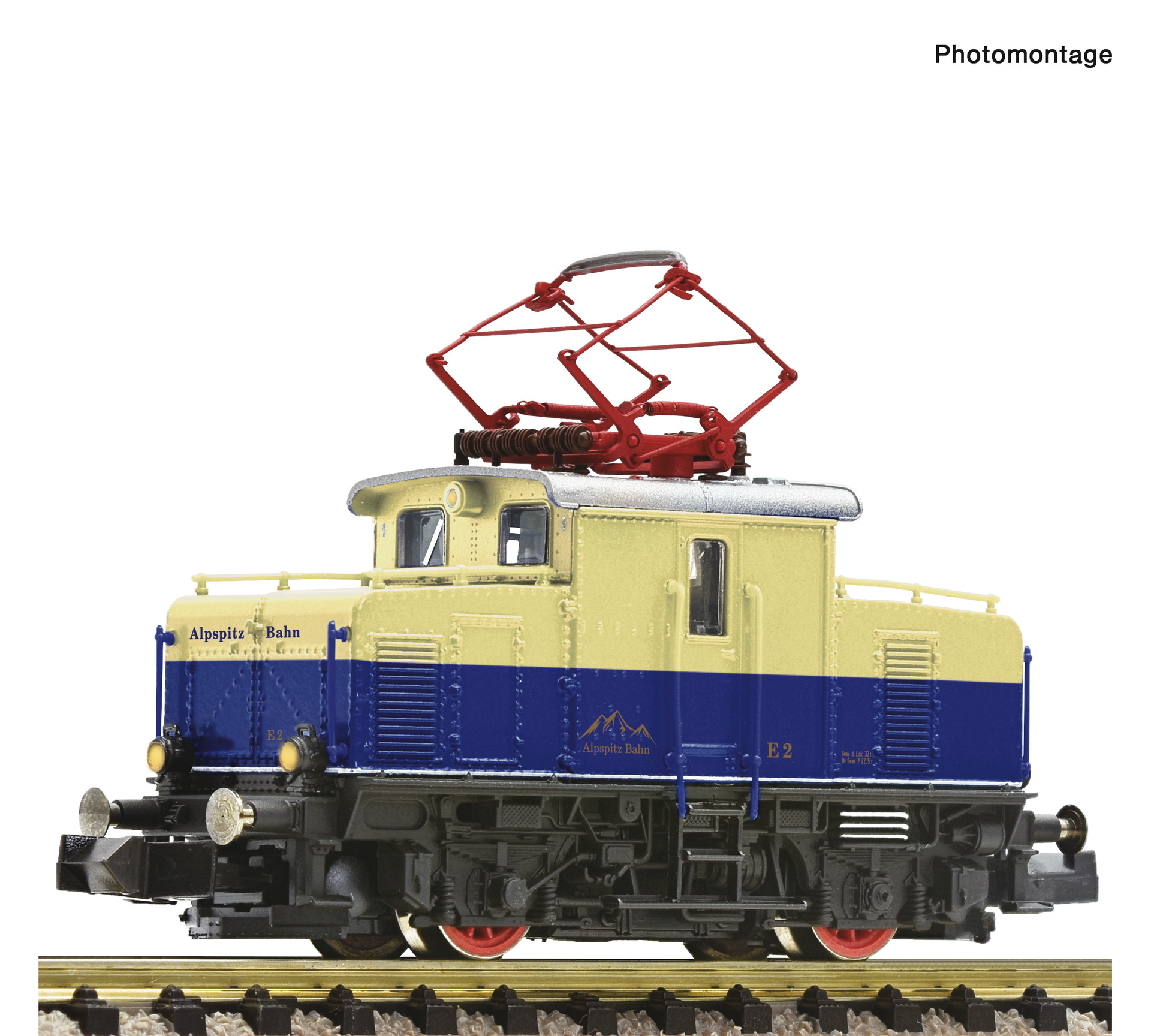
Electric rack-and-pinion locomotive
2,639 SEK
The Alpspitz-Bahn
With their unique combination of mountain landscape and venturesome routing featuring numerous
bridges and tunnels, rack-and-pinion railways engender particular fascination. The
movement of the train is achieved through the engagement of a toothed wheel in a toothed
rack positioned in the centre of the track, as the usual friction generated between wheels and
rails is insufficient for the steep inclines.
After the rack-and-pinion trains, which were originally produced for tourist and industrial
traffic, plans were formed to utilise the toothed rack for continuous passenger and freight
transport, and thus railways in the so-called mixed system were developed. These systems
feature the alternating use of friction and toothed rack sections depending on the gradient
ratios. The traction is exercised by one and the same engine.
The first rack-and-pinion railways were exclusively operated using steam locomotives. At the
end of the nineteenth century, electric traction increased greatly in significance. Today, many of
the trains originally operated using steam have been electrified; on several of these, the steam
locomotives have been replaced or supplemented with diesel traction units. Because steam
engines were so popular with the tourists, several rack-and-pinion railway operators procured
new, oil-fired steam locomotives in the 1990s.
It is possible to find a particularly large number of private rack-and-pinion railways in the
Alps, and these attract tourists from all over the world. Some of the most famous railways
are the Zugspitzbahn in Germany, the Schafbergbahn in Austria and the Vitznau-Rigi-Bahn in
Switzerland, which is the country with the most rack-and-pinion railways.
Description
Article no.: F01.737110
- BrandFleischmann
- Digital/analogueDC analouge
- EpocheIII-VI
- Mfg item no737110
- Scale1:160 (N)
- Secure payment by card
- Send e-mail or chat with us if we are online
- We ship world wide
We reserve the right for typos and errors in article descriptions
Description
Article no.: F01.737110